Google Pixel 11 vs Samsung Galaxy S26: Key Differences Explained
Google's Pixel 11 lineup challenges Samsung's Galaxy S26 with cleaner software and faster updates, but trails in processing power and hardware variety.
In August 2026, Google introduced the Pixel 11 alongside the Pixel 11 Pro to challenge Samsung's Galaxy S26 line. For consumers evaluating a transition away from Samsung, the decision centers on whether they value streamlined software and rapid updates over superior hardware performance and broader device variety.
The internal processing hardware highlights one of the clearest contrasts between the two phone families. Samsung equips the Galaxy S26 with the Snapdragon 8 Elite Gen 5, an engine that outpaces Google's Tensor G6 in demanding mobile games and synthetic benchmark tests. The Galaxy S26 Ultra also delivers superior battery longevity alongside quicker recharge times, giving heavy users a distinct hardware advantage throughout the day.
Video and photo recording also reflect distinct technical philosophies. The Galaxy S26 Ultra captures video natively at 8K at 30 frames per second and 4K at 120 frames per second. In comparison, the Pixel 11 Pro tops out at 4K at 60 frames per second during standard recording, requiring its cloud-assisted Video Boost tool to generate 8K footage. However, Google retains an edge in everyday photography, offering quicker capture speeds, near-zero shutter delay, and realistic tone balancing compared to Samsung's saturated images.
Software Support and Ecosystem Features
Software delivery remains a primary reason to consider Google hardware, as noted in an analysis by Engadget. Pixels run an uncluttered version of Android free from duplicate software or secondary assistants like Bixby. Google provides seven years of operating system upgrades across both flagship models and affordable A-series releases, whereas Samsung limits its Galaxy A line to six years. Pixel users also receive quarterly feature drops and Android platform versions well before rival handsets.
Software utility extends beyond standard applications into specialized device functions. Google includes helpful camera additions such as integrated teleprompter scrolling and Camera Looks, alongside Gemini artificial intelligence that can hail rides via Uber or handle phone conversations. Samsung counters with advanced automation through Modes and Routines, as well as the robust DeX desktop environment, which significantly outperforms the rudimentary desktop features on Android.
Accessory compatibility presents another barrier to switching. Owners of the Galaxy Watch 9 lose critical diagnostic tools without a paired Samsung smartphone, because the proprietary Samsung Health Monitor utility manages blood pressure tracking and electrocardiogram readings.
Form Factor Options and Upgrade Value
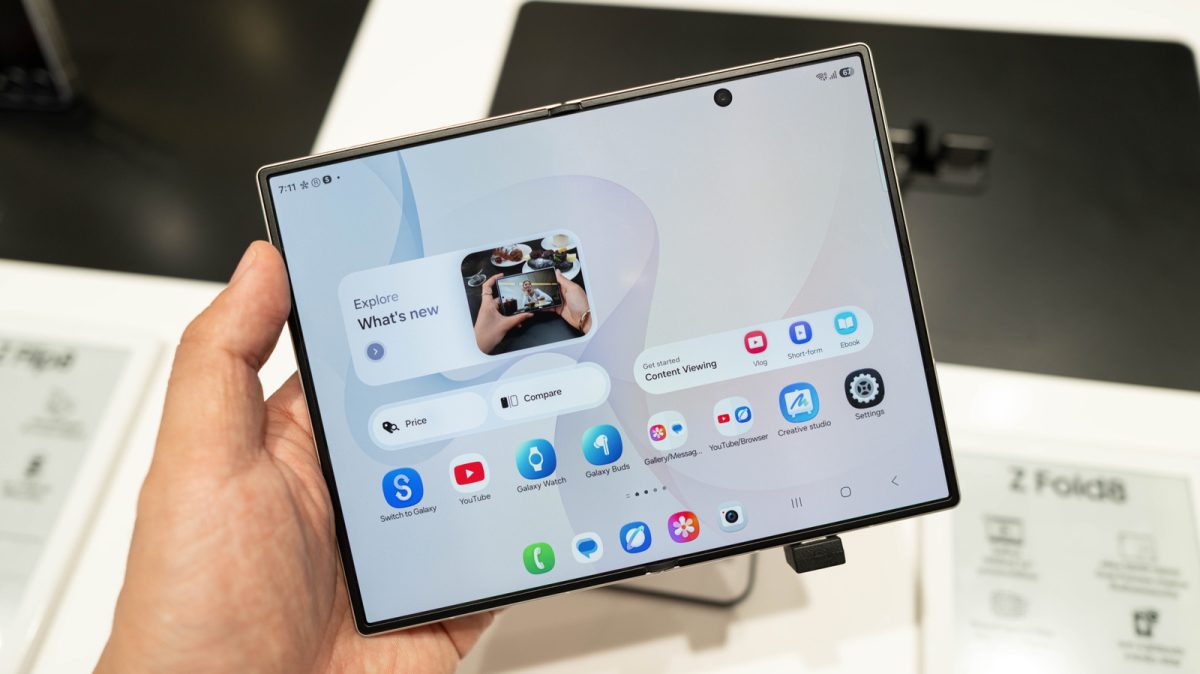
Samsung continues to dominate physical design versatility. While Google sells the Pixel 11 Fold, its design struggles to match the passport-style dimensions of the Galaxy Z Fold 8. Google also provides no direct competitor for the clamshell Galaxy Z Flip line and does not support stylus input on any of its smartphones.
Ultimately, moving to a Pixel makes the most sense for consumers replacing an aging Galaxy model rather than those holding a modern flagship. The Pixel 11 family delivers prompt software maintenance and intuitive day-to-day photography, but power users will likely prefer Samsung's raw power and extensive accessory integration.